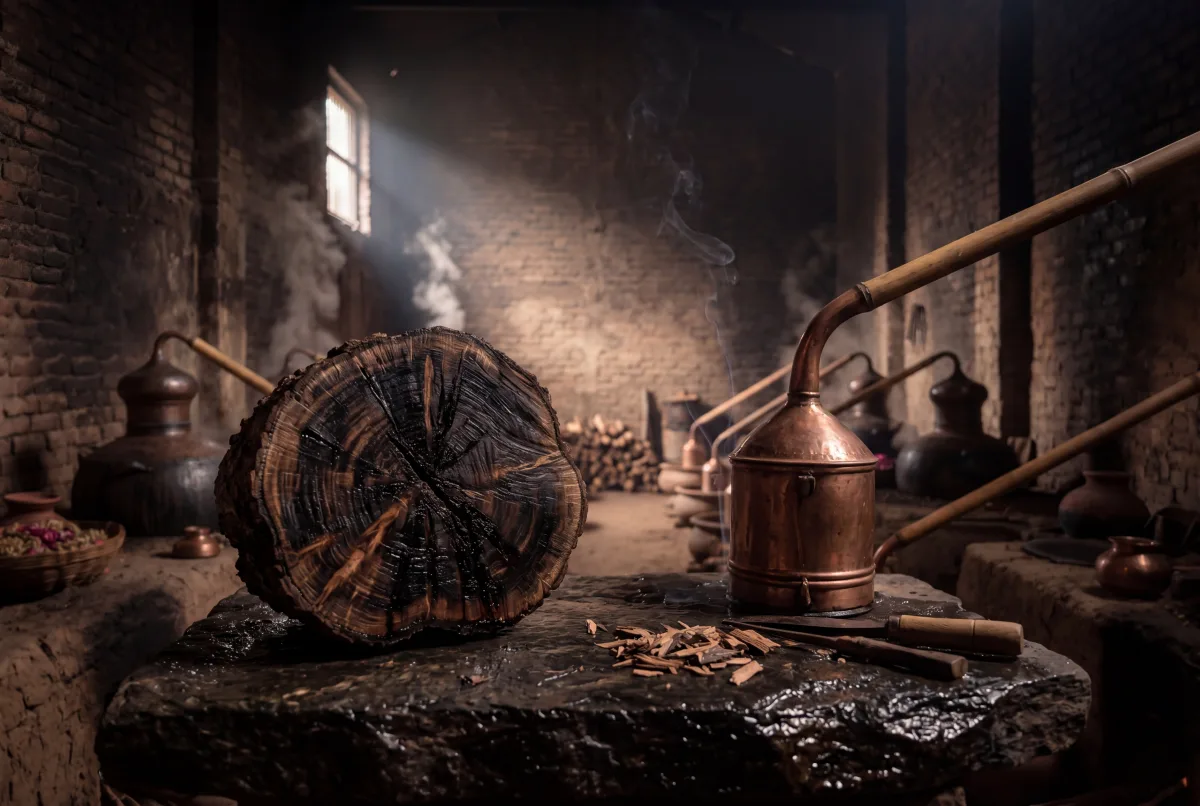
There is a category of perfumery called oud. Few of the people who buy it know that its most complex form grows in the forests of Assam — or that for decades it left India with no name attached.
Aquilaria agallocha is an unremarkable evergreen until it is wounded. When the tree is infected by a particular mould, it defends itself by saturating the affected heartwood with a dark, dense resin. That resin is agarwood. Distilled, it becomes oud — the most expensive raw material in perfumery by weight, and one of the oldest. The Assamese variety, what the trade calls Hindi oud, is widely held by serious perfumers to be the most layered of all: less brashly animalic than the Gulf material, more medicinal in the fine sense, quieter and more dignified as it dries.
A material that travelled without its passport
For most of the modern era, the value chain ran in one direction. Assam grew and distilled the oud; the oil was sold, often raw, to houses in Dubai, Paris and Grasse; those houses composed it, named it, bottled it, and sold it back to the world — including back to India — at a multiple that stayed entirely on their side of the transaction. The material was Indian. The authorship, the margin and the story were not.
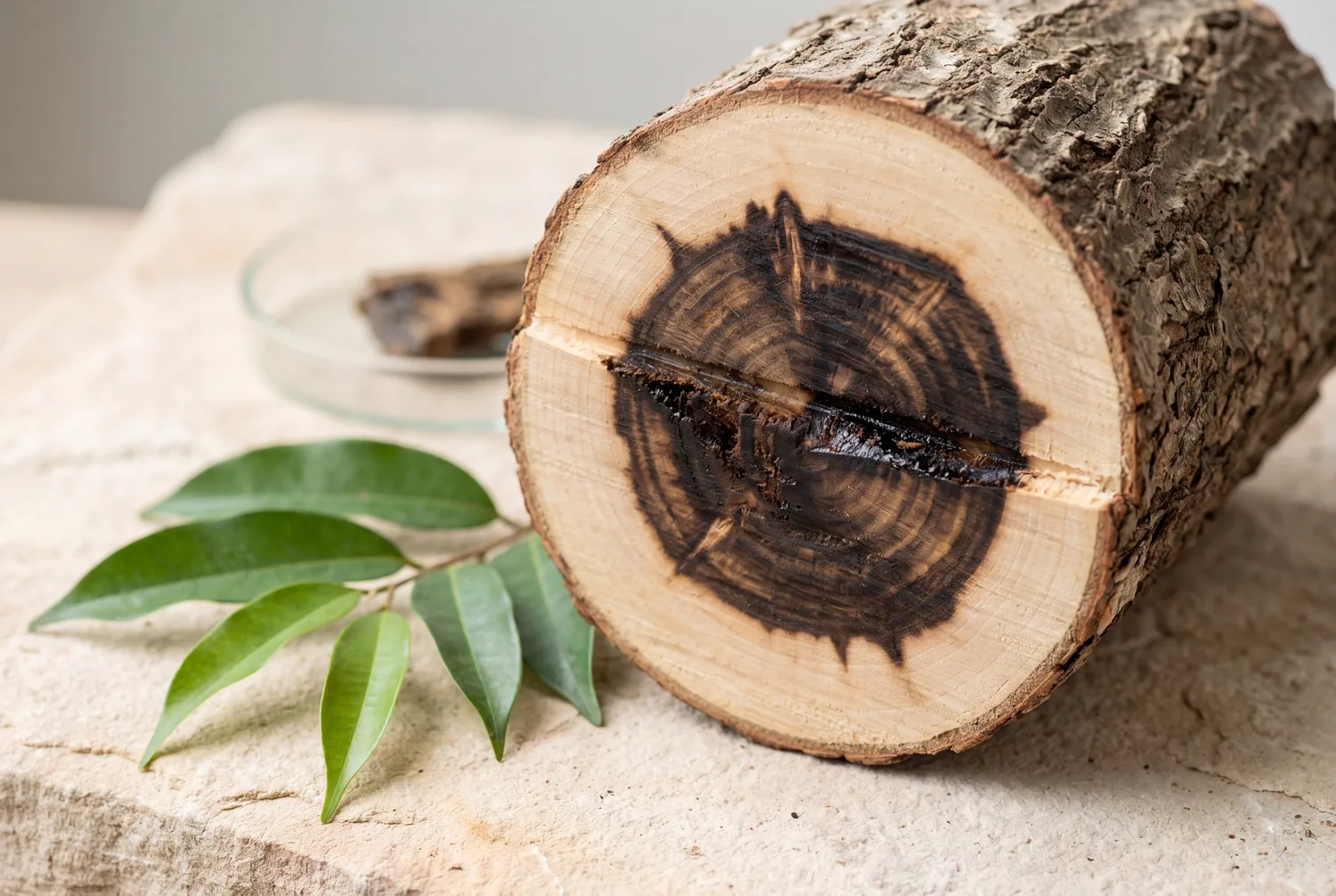
Indian oud built a global category. It is time the bottle said so.
This is not a grievance. It is an opportunity that has sat in plain sight for a generation. The single hardest thing to manufacture in luxury is legitimacy — a reason the world should believe you. India does not need to invent one. It already supplies the world's finest sandalwood, the rain-soaked attars of Kannauj, the saffron of Pampore, and the oud that an entire genre of Western and Arabian perfumery was quietly built upon. The legitimacy is in the ground. What was missing was a house willing to claim it plainly.
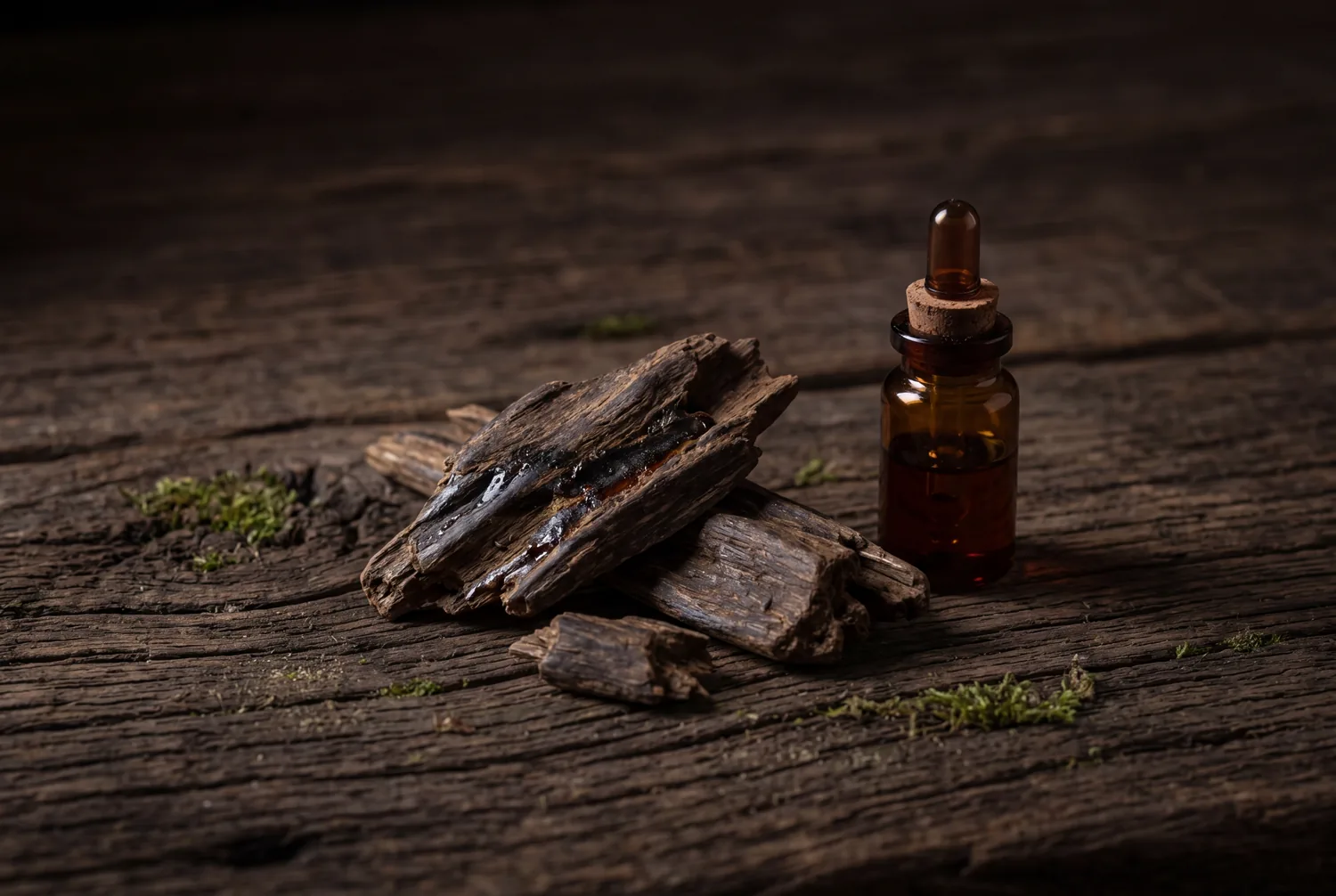
How we built After the Silence
After the Silence opens on Kashmir saffron and black pepper — dry, metallic, faintly bloody — then settles into the Assamese oud at its centre, supported by Mysore sandalwood and a thread of rose. Beneath it, grey amber and a soft smoke accord hold the composition against Indian heat for the better part of a day. We named it for the tree, not for a mood. The point is the material, and the material has a place of origin we are no longer willing to leave off the label.
From Assam to Arabia: the oud the region reveres has an Indian forest behind it. We are simply the first to say so on the bottle — and to build a house worthy of the claim.