The Material Archive
The rarest
materials, named.
Every ARKEN fragrance is built on a real material with a precise origin. Here are the rarest of them, and where each one comes from — not a marketing flourish, a fact.
 01
01
Hero of Before the Rain
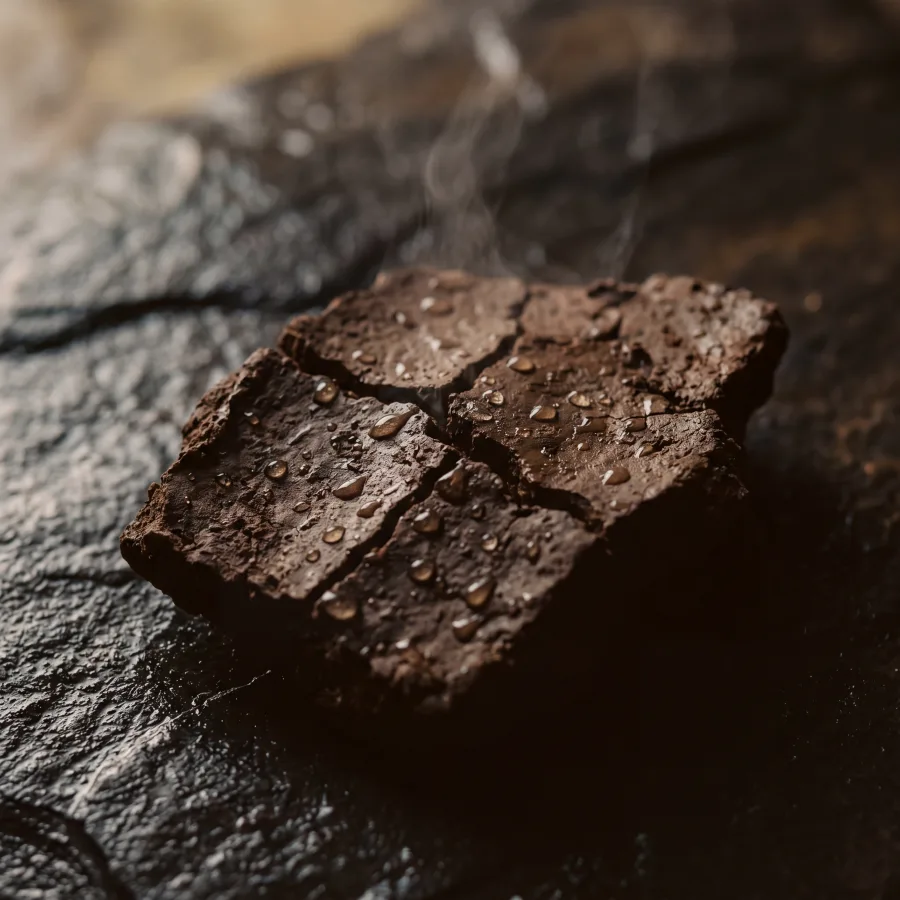
Mitti
Petrichor — the distilled smell of rain on baked earth.
In Kannauj, dry clay is steam-distilled the way it has been for six centuries: earth packed into copper stills, water boiled through it, the vapour caught in a base of sandalwood oil. What rises is petrichor itself — the precise smell of the first rain striking hot ground. No laboratory has reproduced it. We build Before the Rain around the real thing.
Petrichor · Kannauj · distilled since the 1600sHero of First Light
Ruh Khus
Wild vetiver — India's green answer to heat.
Ruh khus is wild vetiver root, distilled at Hathras, on the Gangetic plains of Uttar Pradesh, into a deep green oil that smells of cool earth and water. For centuries it was India's defence against the heat — woven into screens hung wet in doorways, stirred into summer drink. It was exported quietly as "vetiver" and rebuilt under other names abroad. First Light gives it the lead.
Vetiver · Hathras, Uttar Pradesh · cooling India for centuries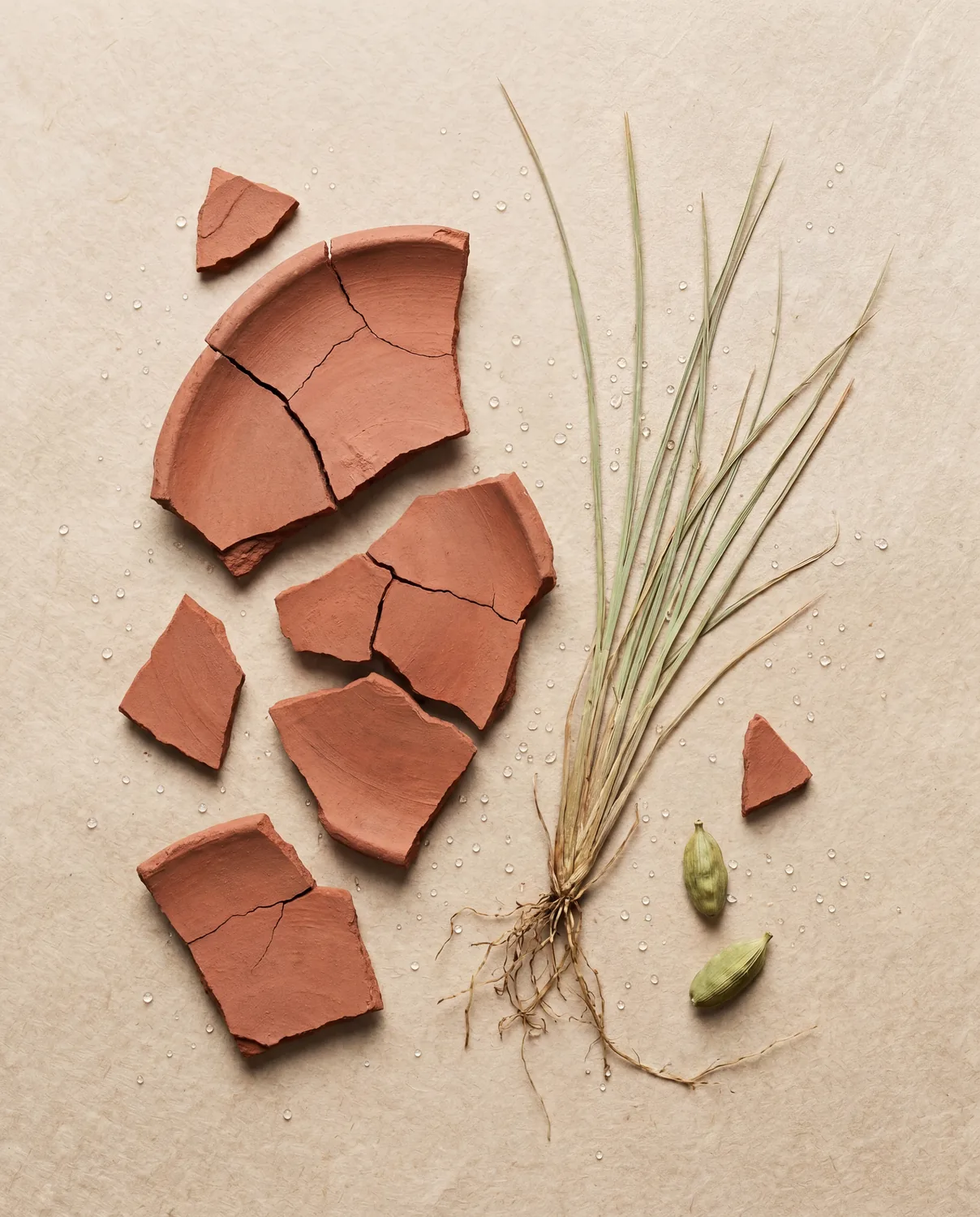 02
02
 03
03
Hero of After the Silence
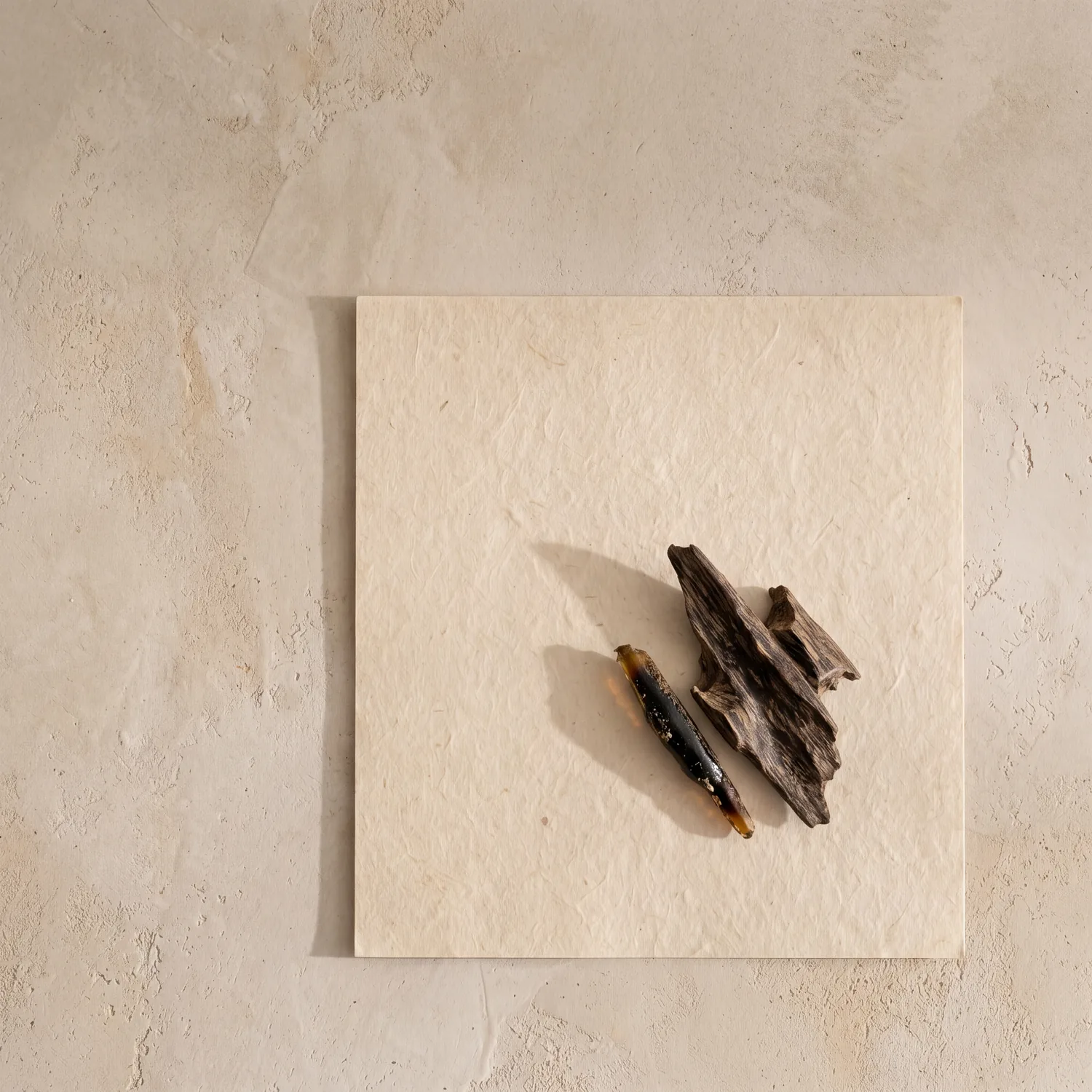
Hindi Oud
Aquilaria from Assam — the most complex oud in the world.
Hindi oud — Aquilaria agallocha — grows in the forests of Assam and is, by consensus, the most complex oud produced anywhere: less heavy than the Arabian varieties, more layered, more alive. For decades it was sold raw to houses in Dubai and Paris who built their names on top of it. After the Silence names it as ours.
Aquilaria agallocha · Assam · prized for a thousand yearsHero of Ember
Kashmir Saffron
Crocus sativus — hand-picked at dawn in Pampore.
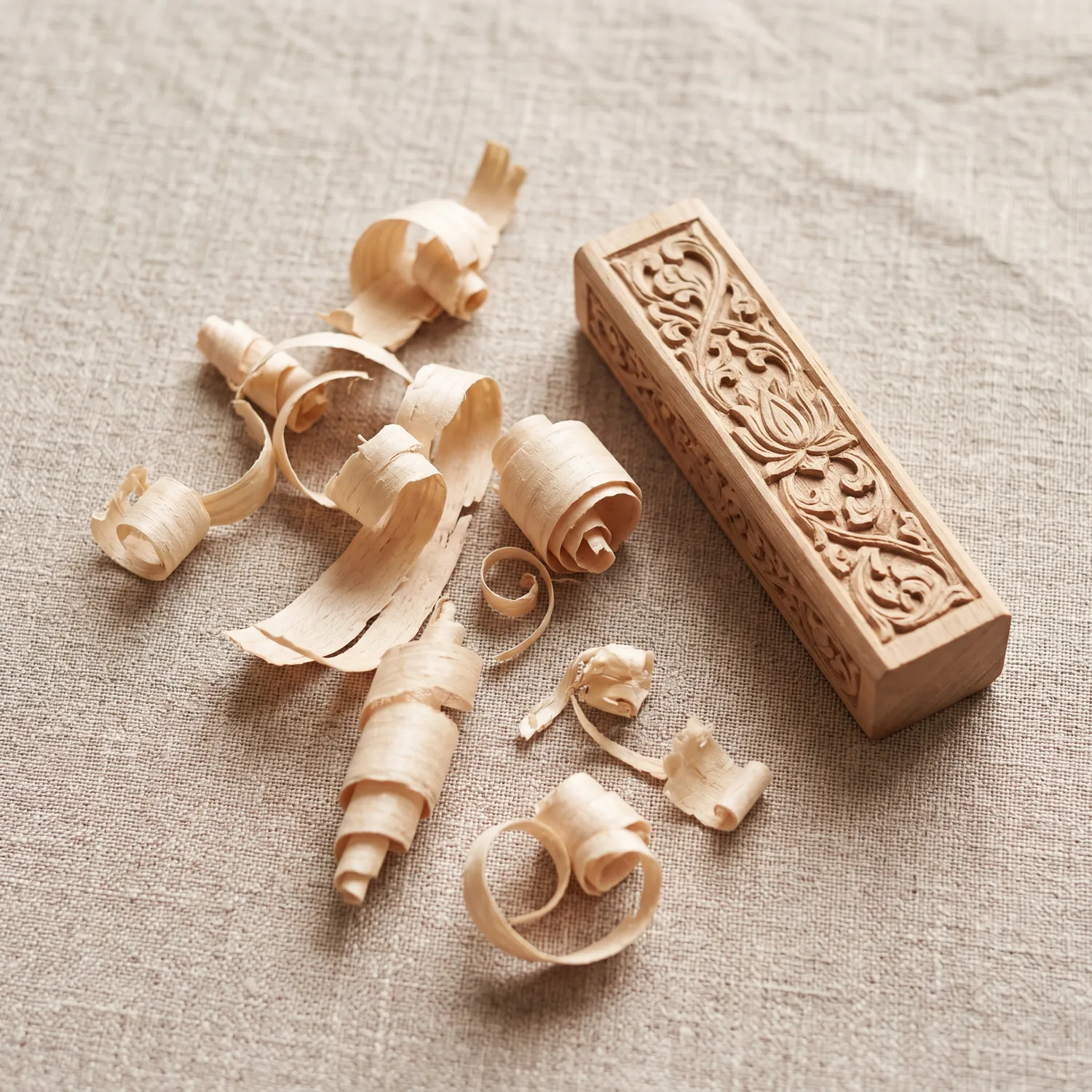
GI-certified saffron from Pampore, where Crocus sativus has been picked by hand at first light for a thousand years — roughly one hundred and fifty flowers to a single gram. Most “saffron” in perfumery is synthetic safranal; we build Ember on the real stigma, its bright, leathered, edible warmth.
Crocus sativus · Pampore, Kashmir · cultivated since the 1500s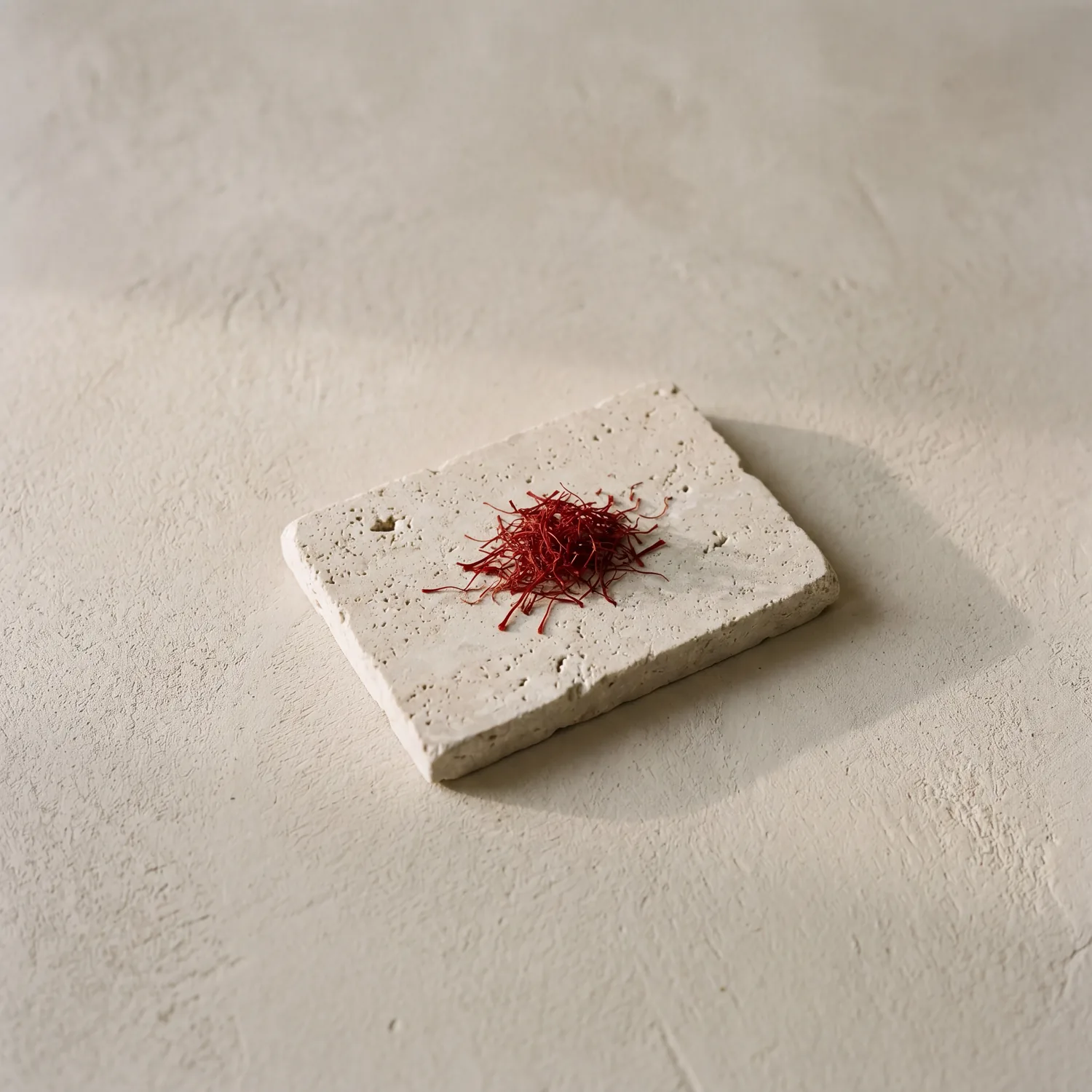 04
04
 05
05
Hero of Quiet Hour
Mysore Sandalwood
Santalum album — the creamiest sandal in the world.
Mysore sandalwood is the grade the whole world measures sandal against — warm, creamy, almost milky, without the sourness of cheaper origins. It is so over-harvested that most “sandalwood” in fragrance is now synthetic. We use the real Mysore oil in Quiet Hour, and it is the entire point of the scent.
Santalum album · Mysore · the benchmark gradeHero of Thorn & Bloom
Gulab
Damask rose — distilled to attar in the north.
Gulab is the Damask rose grown and distilled across northern India — fuller and jammier than the Bulgarian grade, drawn down into attar the traditional way. Most rose fragrances lean on synthetics; the real petal is why Thorn & Bloom smells alive rather than soapy.
Rosa damascena · Pushkar · distilled to attar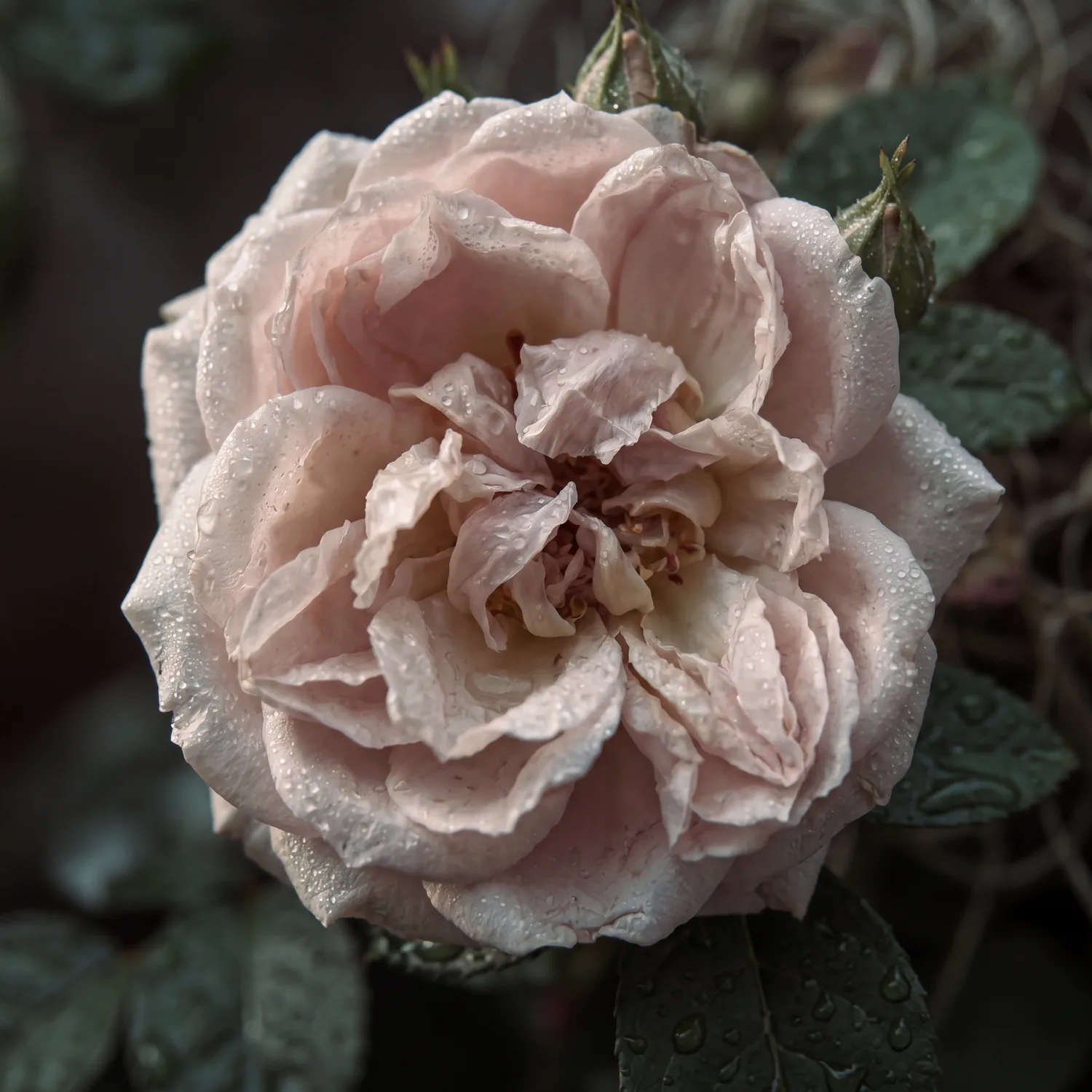 06
06
 07
07
Hero of Night Bloom
Mogra
Jasmine sambac — picked after dark in the south.
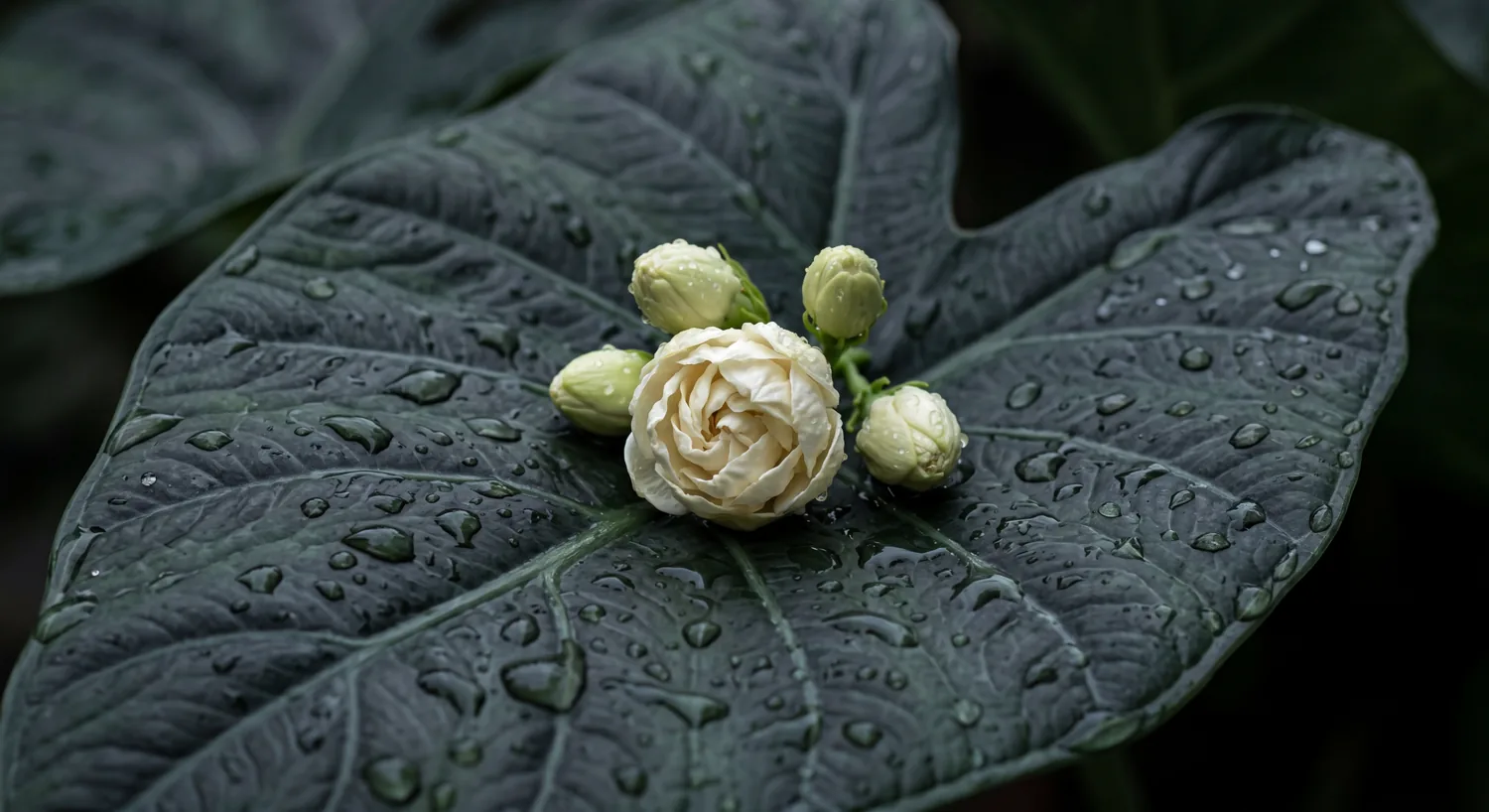
Mogra is jasmine sambac, picked after dark in Madurai when the flower releases its full, almost narcotic scent. Real jasmine absolute is among perfumery's costliest naturals. Night Bloom is built on the real flower, balanced so it reads heady but modern rather than overwhelming.
Jasminum sambac · Madurai · picked at nightFrom earth to bottle
The making.
Harvest
Gathered at the source — clay dug before the rain, khus root pulled wet, agarwood aged in the Assam forest.
Distil
Steam-distilled in Kannauj's copper deg and bhapka over a wood fire — a method six centuries old, read by hand.
Macerate
The composition rests in sealed steel for six to eight weeks, until the notes marry and the alcohol's bite softens.
Bottle
Filled, brass-collared and stone-capped, then checked against a reference standard before it leaves New Delhi.
Provenance
The source, mapped.
Every note here has a place on a map.