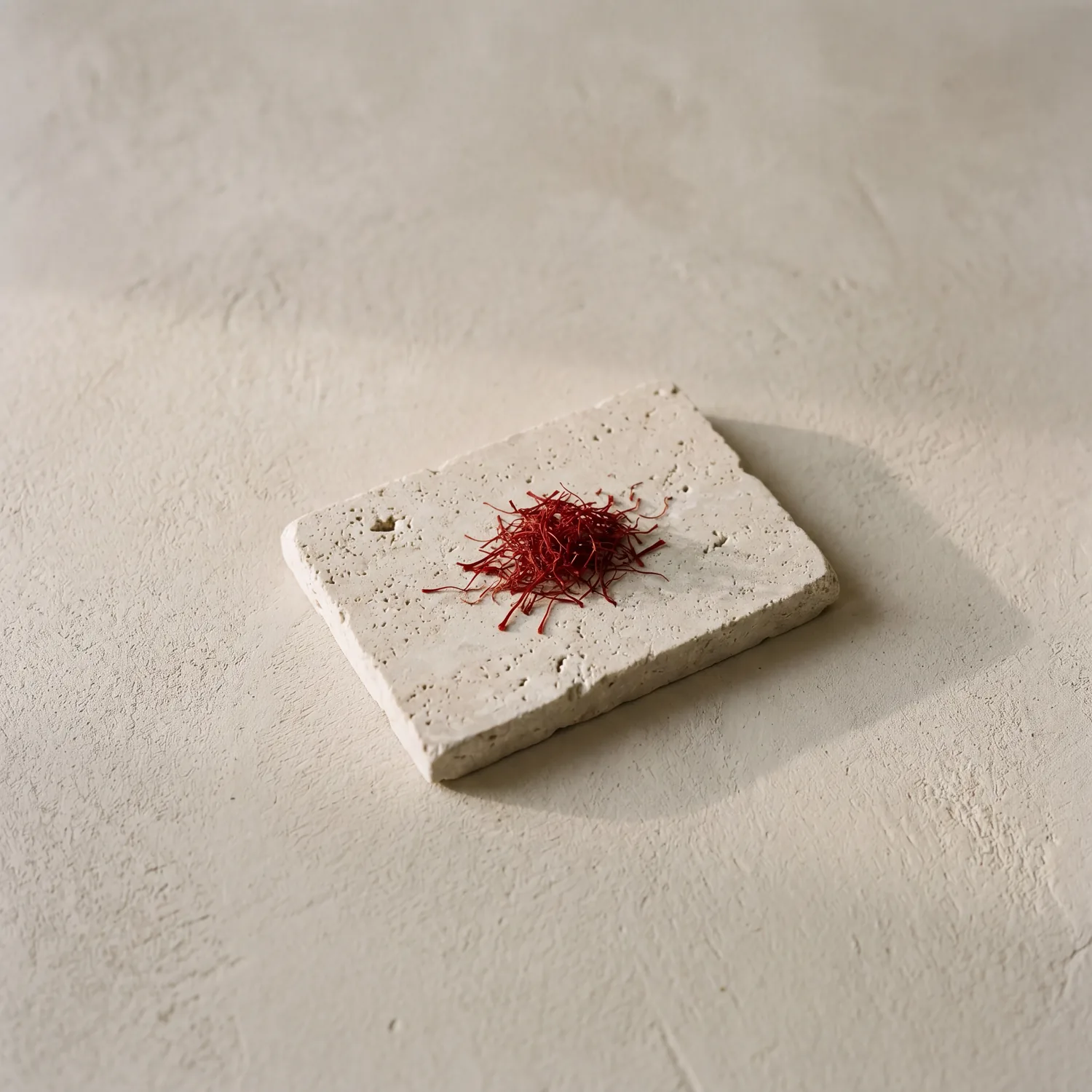
For three weeks each autumn, a plateau outside Srinagar turns violet overnight. The harvest that follows is measured not in kilograms but in threads — and it produces the most prized aromatic material on earth.
Pampore sits on a bed of karewa soil, raised and well-drained, that the saffron crocus appears to have been waiting centuries to find. The flowers open at dawn and must be picked the same morning, before the sun coarsens them. Inside each bloom are three crimson stigmas. Those threads, dried over low heat, are saffron. It takes roughly a hundred and fifty thousand flowers — hand-picked, hand-separated — to make a single kilogram, which is why Kashmiri saffron is GI-certified and priced above a lakh and a half per kilo. It is, gram for gram, more valuable than most precious metals.
What saffron does in a fragrance
Most people know saffron only on the plate, where it reads sweet and golden. In perfumery it behaves quite differently. Used in trace, it gives a dry, almost metallic warmth — a leathery, faintly bloody facet that has no real substitute. It is what lets an oud composition open with tension rather than sweetness. A few hundredths of a percent change the entire character of a base. Too much and it turns medicinal; judged correctly, it is the spark that makes a warm fragrance feel alive rather than merely cosy.
The world's most expensive spice, used by the hundredth of a percent. In fragrance, restraint is the whole art.
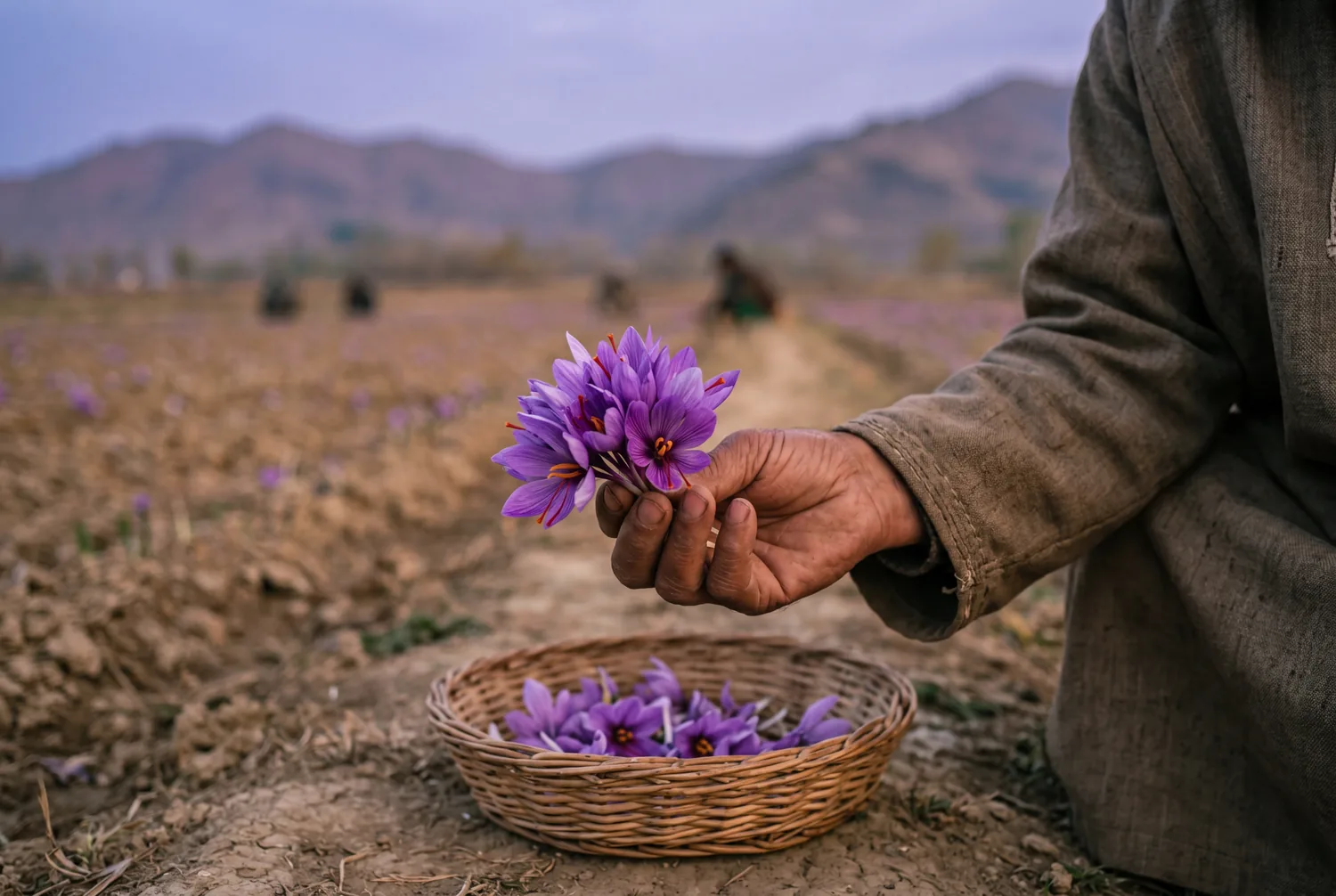
Why we went to the field
We could have bought saffron from a broker in Delhi. We went to Pampore instead, because provenance you cannot see is provenance you cannot defend. Standing in the fields at the harvest, watching the separation done by hand under a tin roof, is how you learn what grade actually means — and how you build the relationship that guarantees the same grade next year. The saffron that opens After the Silence is from here. It is not a flavour note borrowed for marketing. It is a Kashmiri material, named, in a bottle that finally says where it came from.
India grows the rain, the wood and the spice the rest of perfumery prizes. Our work is simply to stand in the field, choose well, and put the place on the label.