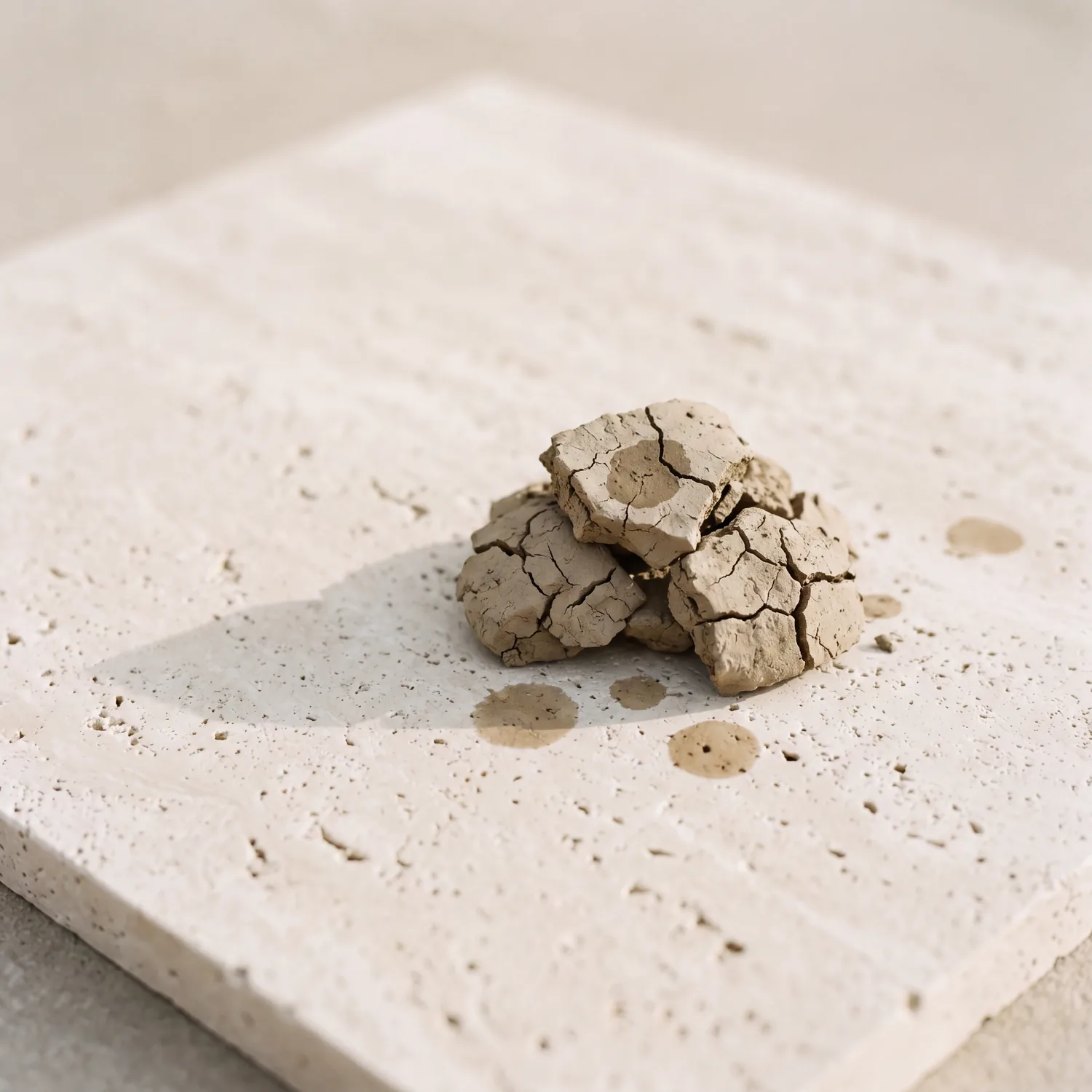
Baked earth · petrichor · Kannauj, Uttar Pradesh
Mitti
The only material in the collection that cannot be reproduced in a laboratory.
What it is
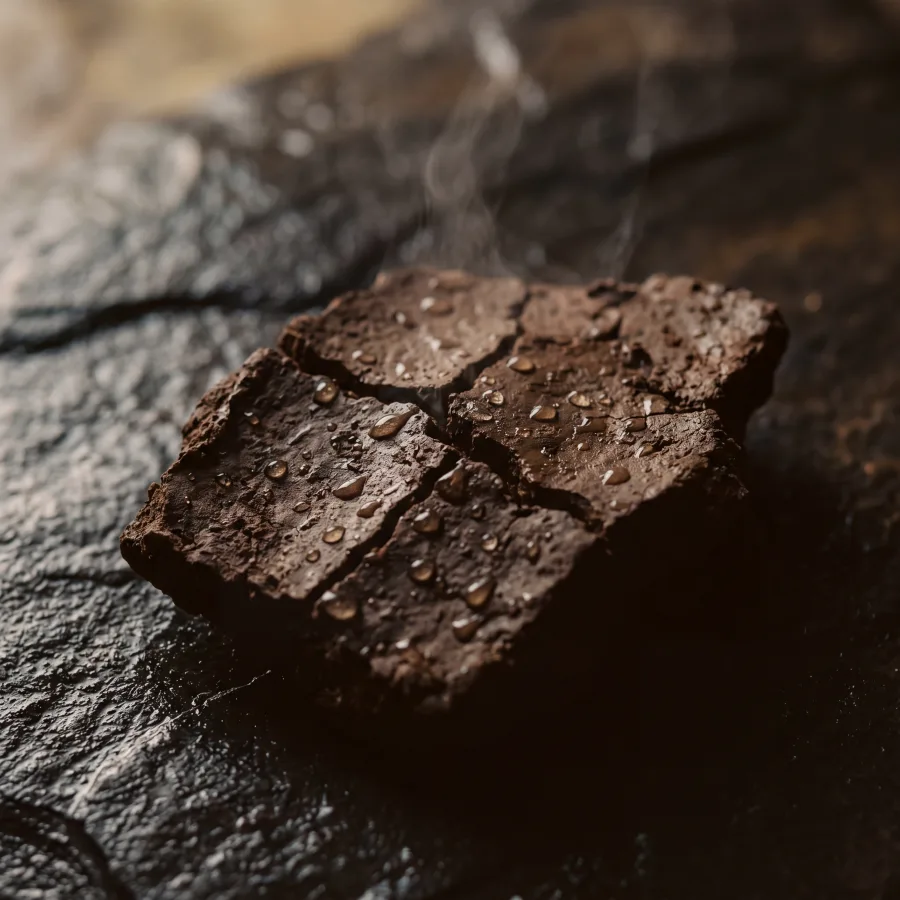
Mitti is earth. Discs of local clay are baked, packed into a copper still and steamed, and the vapour is caught in a receiver already holding sandalwood oil. What condenses is petrichor — the smell of the first rain striking hot, dry ground. It is bottled into sandalwood and sold by the tola.
Why Kannauj
A town on the Ganges plain has run an unbroken tradition of steam distillation since the sixteenth century, supplying the courts of Awadh and later much of the attar of the subcontinent. Roughly four hundred distilleries still work there. The season runs on what is in flower, so the same still produces rose in April and mitti in June.
How it smells
Cold, mineral, faintly green, with a sweetness underneath that comes from the sandalwood base rather than the clay. It reads as weather rather than as a note. Most people place it before they can name it.
The chemistry, and its limit
Geosmin — the molecule behind the smell of wet earth — is detectable by the human nose at about five parts per trillion, and it can be synthesised. What cannot be synthesised is the rest of the distillate: the clay, the fire, the sandalwood it lands in. That is the part we buy.
Why we use it
Because there is no argument for a synthetic when the real thing exists three hundred kilometres away and costs what it costs. A.001 is built around the mitti rather than decorated with it.
In the collection
A.001 Before the Rain
Mitti is the material this edition is built on, and the reason it costs what it does.