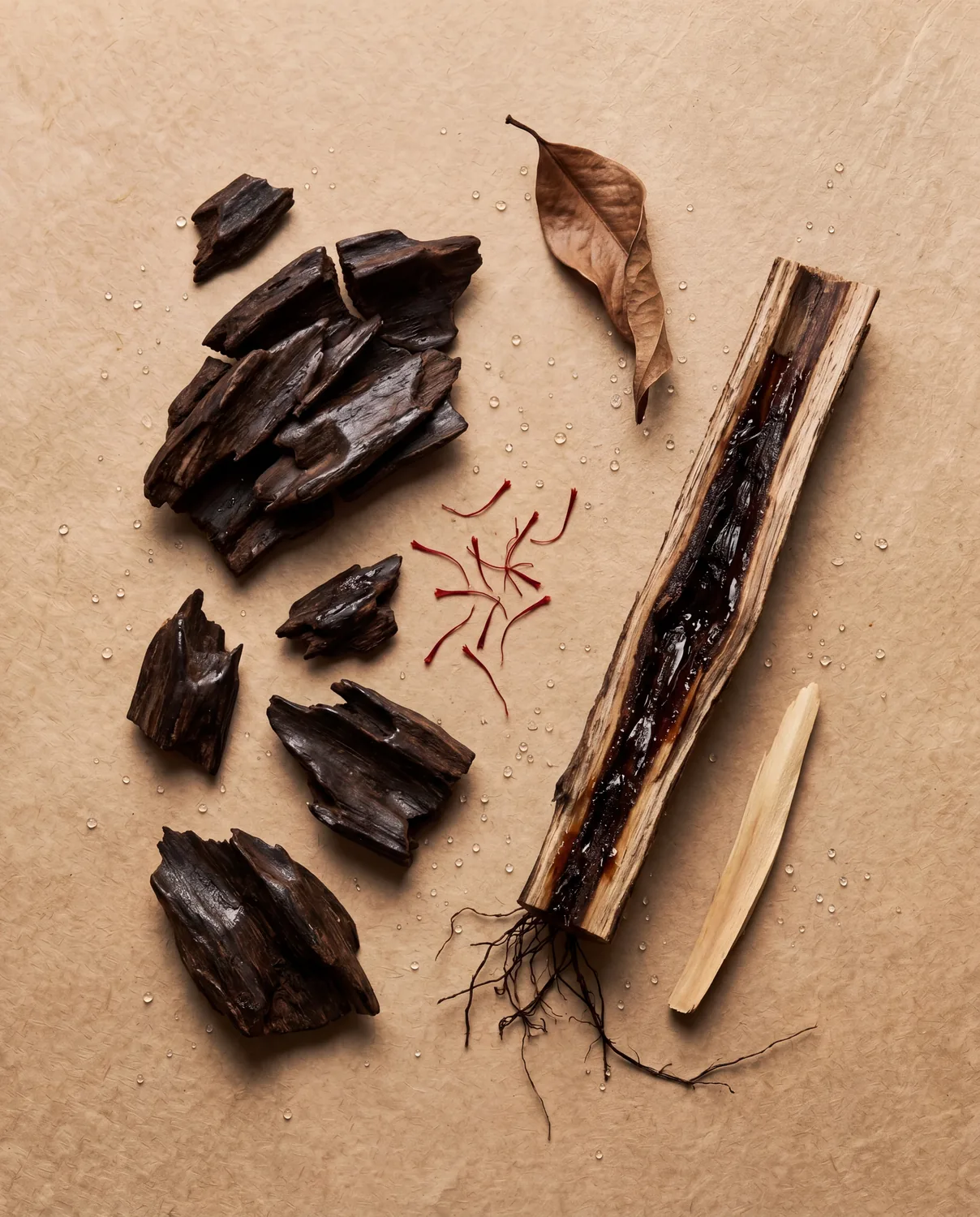
Aquilaria agallocha · Upper Assam
Oud
The tree makes the resin only where it has been injured.
What it is
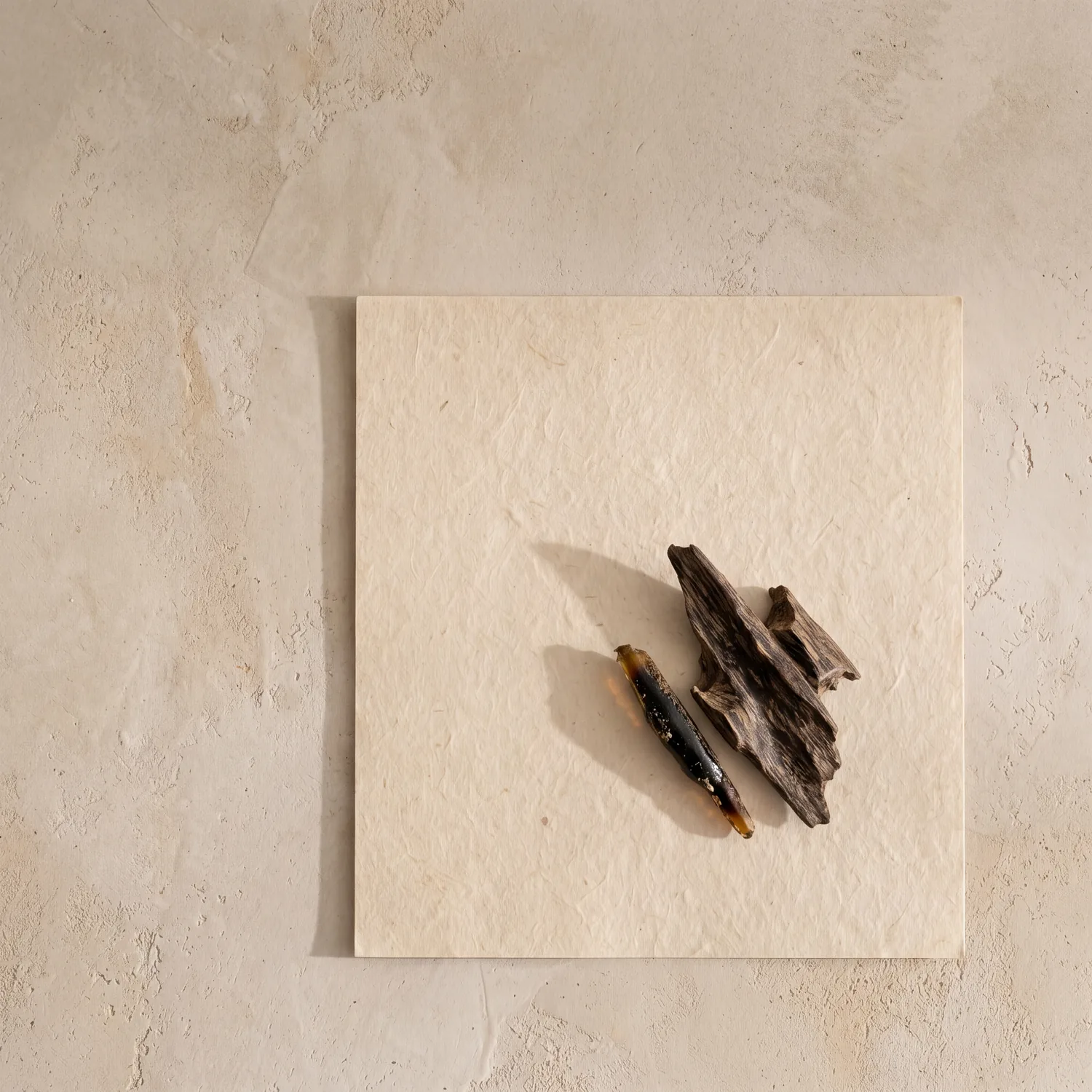
Aquilaria agallocha is an unremarkable evergreen until it is wounded. When the exposed heartwood is colonised by a particular mould, the tree defends itself by flooding the affected wood with a dark, dense resin. That resin is agarwood. Distilled, it is oud.
Why Assam
The Assamese grade is widely held by serious perfumers to be the most layered of them: less brashly animalic than the Gulf material, more medicinal in the fine sense, quieter and more dignified as it dries. It is the grade an entire genre of perfumery was quietly built upon.
How it smells
Resinous, warm, faintly sweet, with a medicinal edge in the first minutes that settles into something closer to skin. It does not smell like wood. It smells like a wound that has healed well.
What it costs
Wild Aquilaria is listed under CITES, and most legitimate oud now comes from plantation trees inoculated on purpose and left for years. Yield is low and variable, which is why the oil is priced by the tola and why a single reformulation can move a composition further than a customer expects.
Why we use it
Most oud sold in fragrance is a reconstruction built from a handful of aroma chemicals. It is a reasonable thing to make: stable, repeatable, and not dependent on a wounded tree. It also smells like a decision rather than a material. The price of A.002 is mostly this choice.
In the collection
A.002 After the Silence
Oud is the material this edition is built on, and the reason it costs what it does.