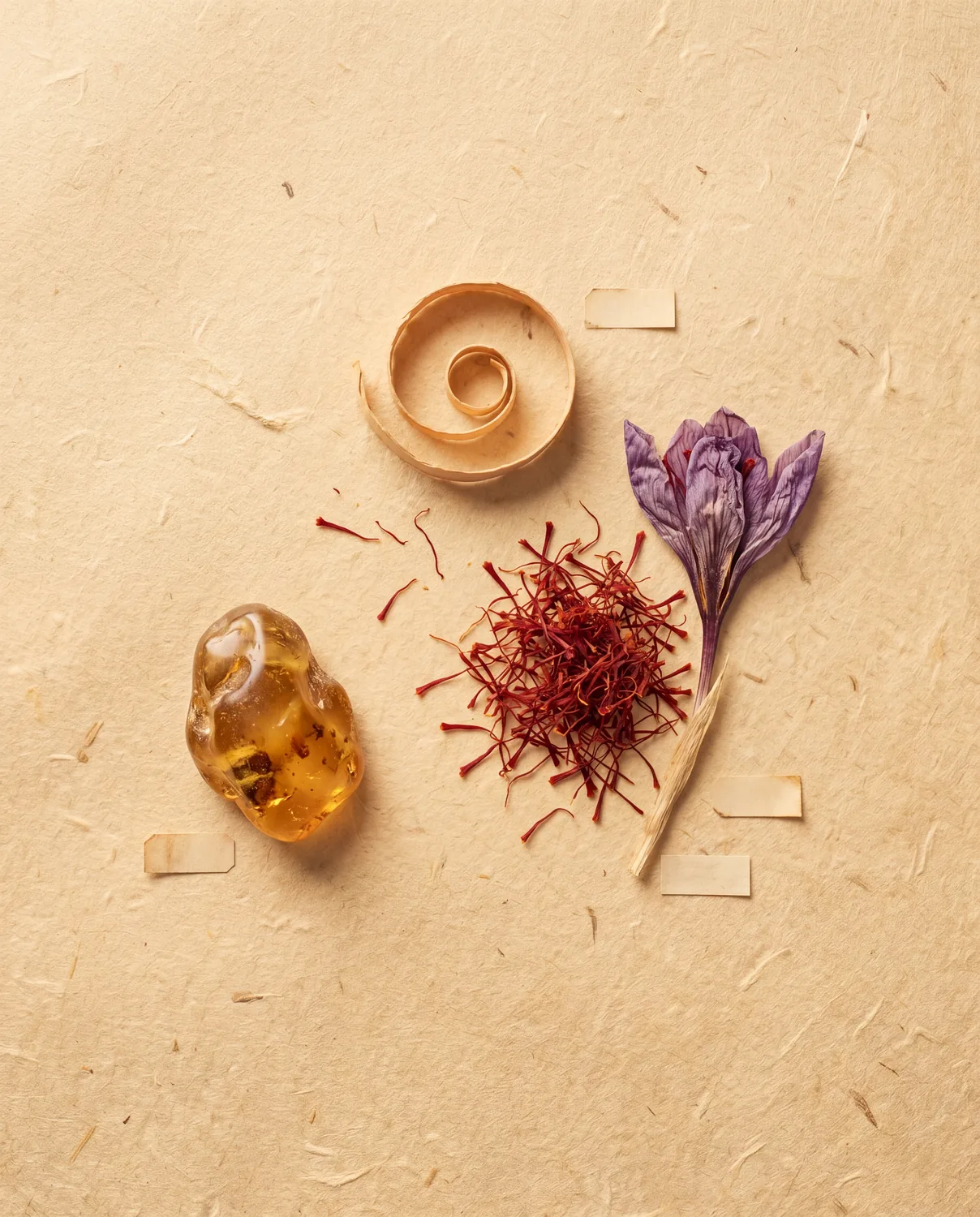
Crocus sativus · Pampore, Kashmir
Saffron
Roughly a hundred and fifty thousand flowers make a kilogram.
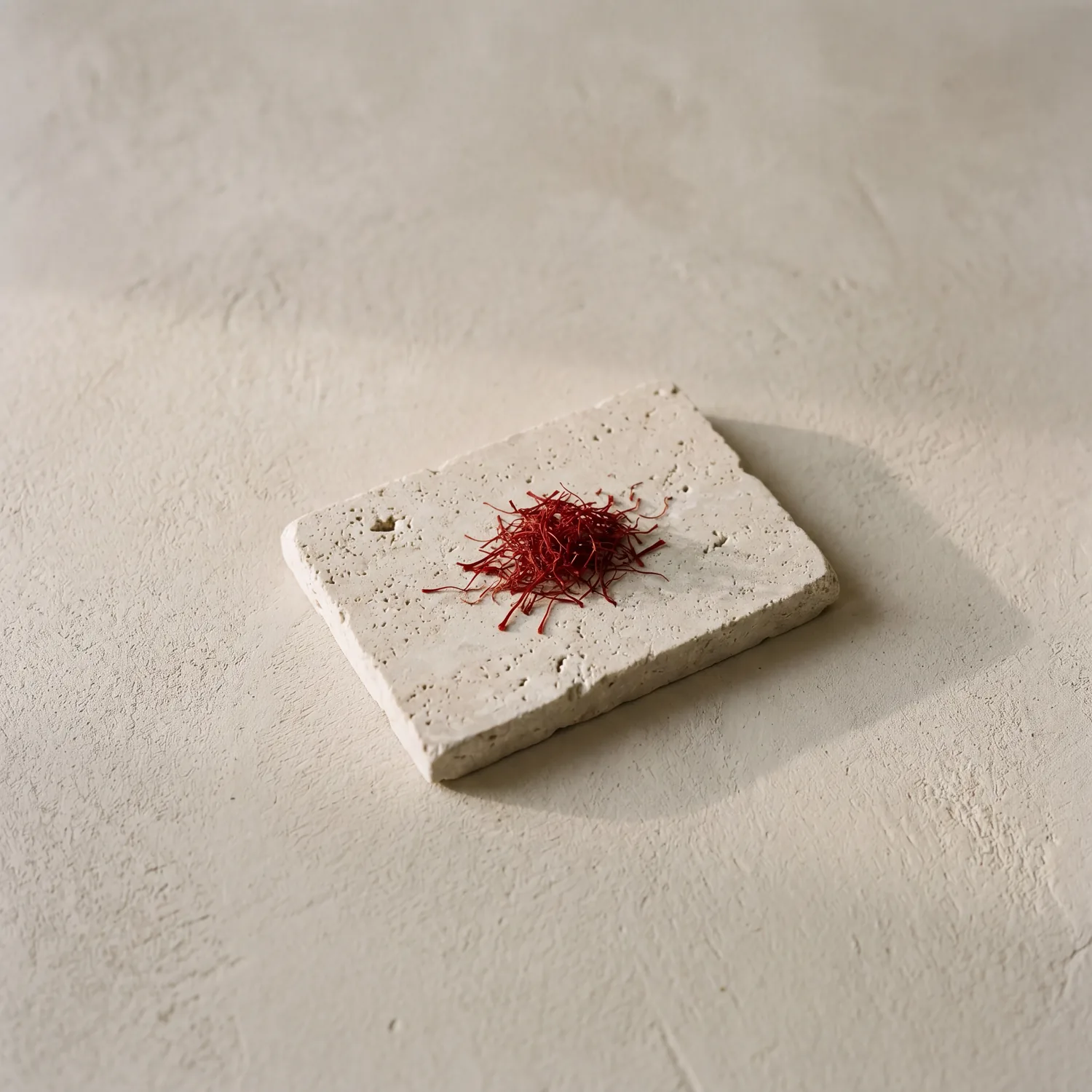
What it is
Three crimson stigmas sit inside each crocus flower. They are picked at dawn, separated by hand, and dried over low heat. That is saffron. Pampore sits on a bed of karewa soil, raised and well-drained, that the crocus appears to have been waiting centuries to find.
The harvest
For three weeks each autumn a plateau outside Srinagar turns violet overnight. The flowers open at dawn and must be picked the same morning, before the sun coarsens them. The separation is done by hand, under a tin roof, by people who have done it for decades.
How it smells
Nothing like the plate. On food saffron reads sweet and golden; in a composition it is dry, faintly metallic, almost leathered — a bloodied, tense facet that has no real substitute. Used in trace, it is what lets a warm fragrance open with tension instead of sweetness.
Adulteration
Safflower and dyed stigma are common enough that GI certification exists to answer them. Grade is not something you can take on trust from a broker, which is why we buy at the field and not in Delhi.
Why we use it
Almost every saffron in modern perfumery is safranal, a synthetic that imitates the leathered glow. A.004 is built on the stigma, used by the hundredth of a percent, and it is still the most expensive line on the sheet.
In the collection
A.004 Ember
Saffron is the material this edition is built on, and the reason it costs what it does.